The Cornell Department of Chemistry and Chemical Biology has a long history of discovery, innovation and scholarship. We are fortunate to count Nobel Prize winners, National Academy Members, MacArthur Fellows and Guggenheim Fellows among our faculty. Teaching thousands of undergraduate and advanced students each year, education is a central focus of our endeavors. Our graduate students and postdoctoral fellows perform cutting-edge research that is supported by many national granting agencies and foundations. We are committed to the advancement and inclusion of all students and aim to foster a diverse environment for science and learning.
Laura Chichisan
Chemistry has the potential to help solve many of the world's problems. At Cornell, we're working on those solutions.
As the need to find climate change solutions becomes ever more urgent, Cornell chemists are leading the way with innovative and far-reaching discoveries, including better electric batteries, carbon capture technologies, renewable plastics and improvements in solar cells.
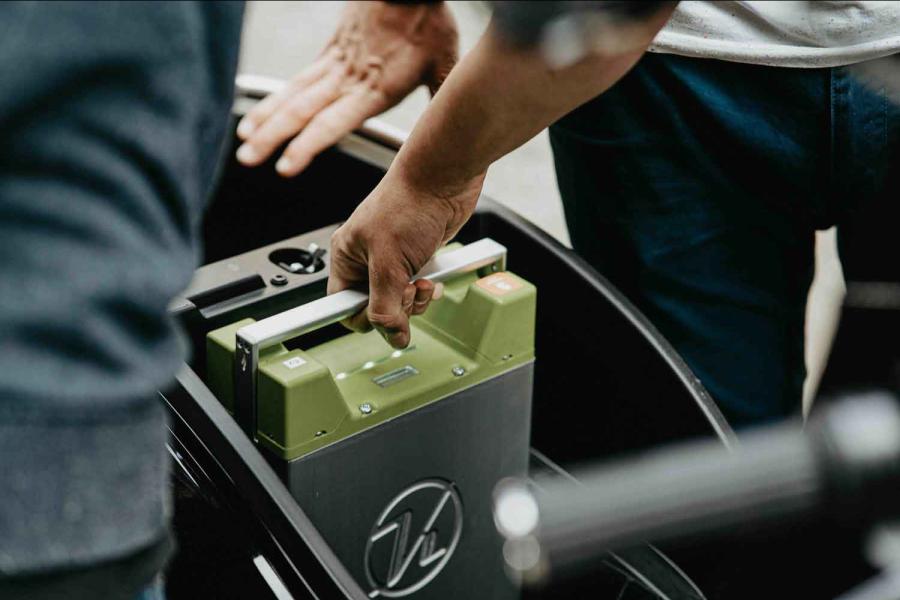
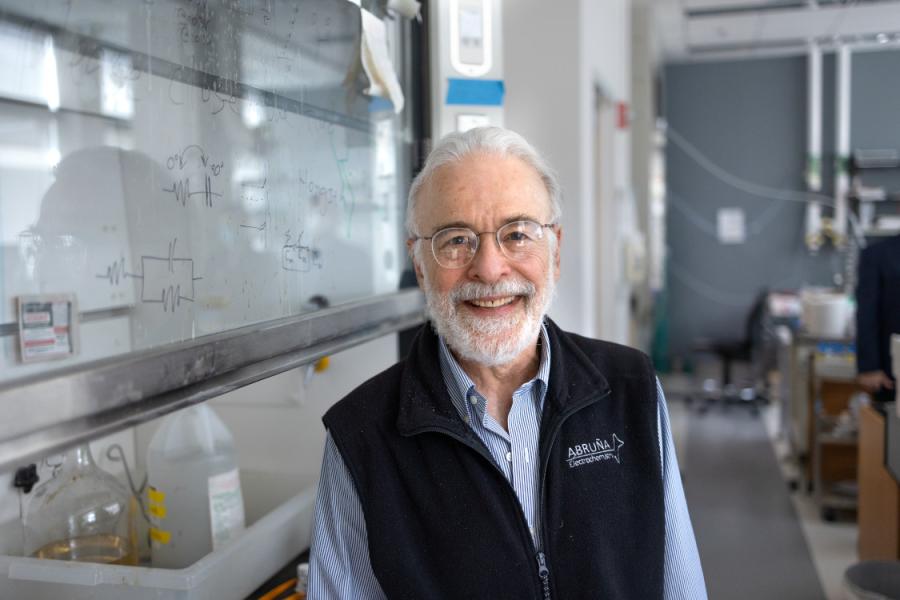
A collaboration with Cornell is bringing relief to Vieques, a Puerto Rican island that still has unreliable power nine years after Hurricane Maria. A solar-powered battery that operates independently of the main island’s grid is the first installment of a project led by Héctor Abruña, chemistry professor in Cornell's College of Arts and Sciences – still to come is a green-hydrogen fuel cell system.
Cornell admits the Class of 2030 emphasizing real-world impact, enrolling 5,776 students from 102 countries.
At Cornell University, the diverse cohort reflects the land-grant mission and applied learning goals across multiple colleges.
Cornell University researchers Héctor D. Abruña and David Muller developed a nickel‑carbon catalyst that delivers high hydrogen oxidation performance in alkaline fuel cells, surpassing U.S. DOE power density targets. Published in PNAS, this breakthrough demonstrates a durable, low‑cost, precious‑metal‑free path to scalable clean‑energy fuel cell technology.
Cornell researchers have uncovered a built-in molecular “gate” that controls the production of the molecule nitric oxide, a crucial signaling molecule throughout biology that in humans helps regulate blood pressure, brain signaling, and immune defenses. But when levels go unchecked, it can damage cells and disrupt normal signaling.
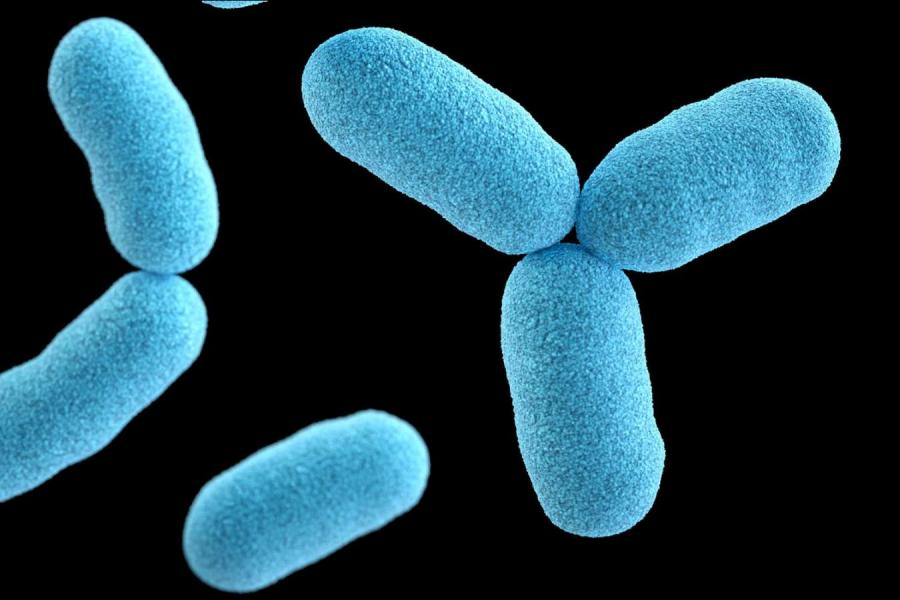
Researchers discovered electron transfer in electroactive bacteria is mediated by CymA proteins’ ability to synchronize and form a biomolecular condensate in the cell’s inner membrane.
The Gustavus John Esseln Award for Chemistry in the Public Interest from the Northeastern Section of the American Chemical Society honors outstanding achievement in scientific and technical work that contributes to public well-being.
Bayu Ahmad, a doctoral candidate in chemistry and chemical biology, studies the use of organic chemistry for sustainable applications under the guidance of Phillip Milner at Cornell.
The department encourages students to pursue research opportunities while attending Cornell University. More than half of all Chemistry majors engage in research at some point during their undergraduate career, with many beginning in their sophomore or junior year and continuing their research through summer fellowships and outside laboratory positions. Approximately half of every graduating class, or about twenty students, enroll in the CHEM 4980 Honors Seminar and submit a written thesis prior to graduation. Areas of focus outside of Chemistry may include Mechanical Engineering, Physics, Biology, Food Science, and at the Veterinary School. The department offers a variety of workshops and seminars each year that explore best practices for joining a research group, and co-sponsors the CHEM research symposium with Alpha Chi Sigma, the co-ed chemistry fraternity at Cornell.
The availability of research opportunities can change with each new semester. Students should carefully consider their availability before pursuing a research position in the department. Performing advanced research under the guidance of a faculty member and/or graduate student may require an average commitment of eight to twelve hours each week. Students interested in conducting research in C&CB should contact chemundergrad@cornell.edu before seeking a research advisor in the department.
Undergraduate research can be conducted for academic credit or pay (as arranged by the research advisor and department). Credit can be earned through any of the following research listings:
CHEM 4210 - Introduction to Inorganic Chemistry Research
CHEM 4330 - Introduction to Analytical Chemistry Research
CHEM 4430 - Introduction to Chemical Biology Research
CHEM 4610 - Introduction to Organic Chemistry Research
CHEM 4770 - Introduction to Physical Chemistry Research
Once an arrangement has been made between a student and a research advisor, the student must complete the independent study form provided by their respective college. For Arts & Sciences students, please complete the College of Arts & Sciences Independent Study Form.