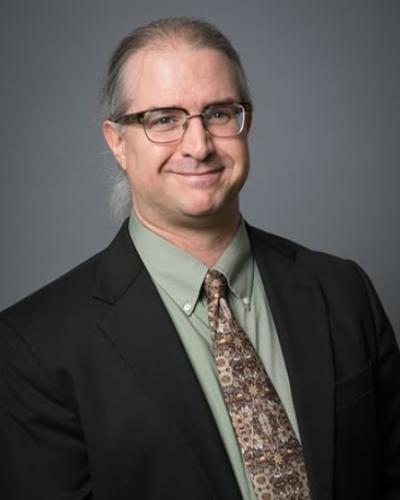
Gaby Markle
Chemisty
McAllen, Texas
Why did you choose Cornell?
I initially chose to attend Cornell because I was interested in majoring in biology on a pre-med track. A close friend from my hometown who was pursuing a similar path spoke highly of Cornell’s strengths in the life sciences, which strongly influenced my decision.
Once I arrived, however, my interests began to evolve. Through coursework and early research exposure, I found myself increasingly drawn to chemistry and the underlying molecular principles that govern biological systems. This led me to switch my major to chemistry and pursue research in biomaterials and nanomedicine, ultimately shaping my decision to follow a Ph.D. path.
Cornell’s strength in interdisciplinary research made that transition not only possible, but incredibly rewarding. What stood out most to me was the university’s “any person, any study” philosophy. It created an environment where changing directions wasn’t seen as a setback, but as a natural part of intellectual growth. That flexibility allowed me to explore, take risks and ultimately find a path that better aligned with my long-term goals in developing advanced therapeutic materials.
What is your main extracurricular activity and why is it important to you?
My main extracurricular activity has been conducting research in the Wiesner group, where I study aluminosilicate nanoparticles as potential cancer therapies and am currently completing my senior thesis. This work is especially important to me because it allows me to apply concepts from my coursework to real-world problems, while designing my own experiments and contributing to a larger body of research. I find it incredibly rewarding to take an idea from theory to practice and see how fundamental chemistry can translate into meaningful biomedical applications.
I also value my role as a teaching assistant for inorganic chemistry. Teaching has pushed me to think more deeply about the material and communicate complex ideas clearly. More importantly, I hope to help other students experience those “eureka” moments that made me fall in love with inorganic chemistry in the first place.
What are the most valuable skills you gained from your Arts & Sciences education?
The most valuable skill I’ve gained is learning how to think independently and make connections across different fields and disciplines. Rather than approaching problems from a single perspective, I’ve learned how to integrate concepts from chemistry, biology, physics and materials science to better understand complex systems.
This has been especially important in my research, where answering meaningful questions often requires bridging ideas that aren’t traditionally taught together. I’ve become more comfortable navigating ambiguity, asking my own questions and building solutions from the ground up rather than relying on a prescribed path.
Ultimately, my education has taught me not just what to think, but how to approach unfamiliar problems with curiosity, creativity and a willingness to synthesize ideas across disciplines. That mindset is something I know I will carry forward into my future work.
If you were to offer advice to an incoming first-year student, what would you say?
My biggest piece of advice would be to avoid comparing yourself to other students. Everyone at Cornell has their own unique interests, strengths and paths, and trying to measure yourself against others can take away from your own growth.
I would also encourage students not to feel pressured to be pigeonholed into studying just one thing. Cornell is an incredible place to explore different disciplines and discover what truly excites you. Some of the most meaningful learning happens when you allow yourself to follow curiosity, even if it doesn’t fit neatly into a single category. Most importantly, embrace questions and even confusion, because that is often where the deepest understanding and most rewarding discoveries begin.
What are your plans for next year?
Next year, I will be pursuing a Ph.D. in materials science and engineering at the University of Illinois Urbana-Champaign. I plan to work with Dr. Andrew Smith, focusing on the synthesis and functionalization of quantum dots for applications in single-cell imaging. I am especially excited about using nanomaterials to better understand and probe complex biological systems at high resolution. This work builds directly on my undergraduate research experiences and my broader interest in biomaterials and nanomedicine.
Every year, our faculty nominate graduating Arts & Sciences students to be featured as part of our Extraordinary Journeys series. Read more about the Class of 2026.